Why Sustainability Matters in Garden Landscaping
Every decision we make when improving our homes has an environmental impact.
From the materials we choose to how long they last, sustainable landscaping focuses on reducing waste, conserving natural resources and creating outdoor spaces that stand the test of time.
Garden fencing is no exception.
Traditional timber fencing often requires trees to be harvested, chemical treatments to protect against rot, and regular maintenance throughout its lifespan. Over time, damaged panels frequently end up in landfill, only to be replaced every few years.
Modern composite fencing offers a more sustainable alternative by combining recycled materials with long-lasting performance.
What Is Composite Fencing?
Composite fencing is manufactured using a blend of recycled wood fibres and recycled plastics.
Rather than relying solely on newly sourced timber, these materials are given a second life, creating fence panels that are both attractive and incredibly durable.
The result is a product that captures the natural appearance of wood while eliminating many of the problems associated with traditional timber fencing.
How Eco-Friendly Fencing Helps Reduce Waste
One of the biggest environmental benefits of composite fencing is its ability to reduce waste.
Every year, thousands of tonnes of plastic and wood waste are diverted from landfill and transformed into high-quality building products.
Instead of becoming pollution, these recycled materials are reused to manufacture fencing that can last for decades.
Choosing recycled composite fencing helps:
- Reduce landfill waste
- Reuse valuable raw materials
- Lower demand for newly harvested timber
- Extend the life of recyclable resources
- Support the circular economy
Rather than following the traditional “use and dispose” model, composite fencing contributes to a more sustainable way of building and landscaping.
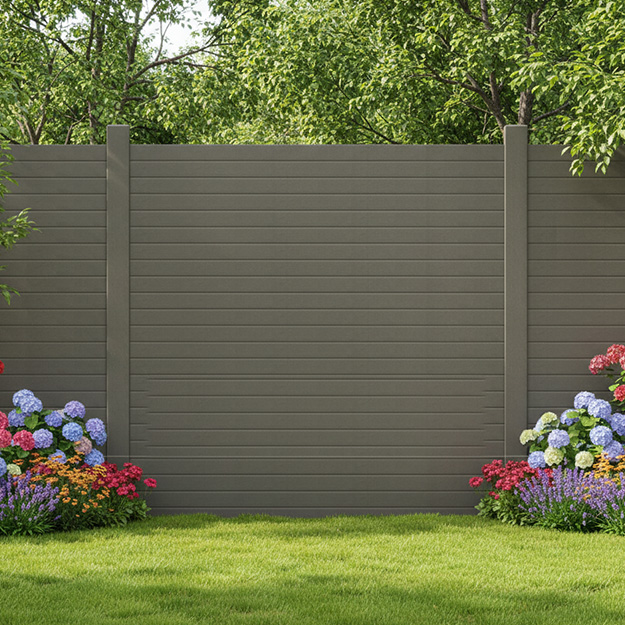
The Environmental Benefits of Composite Fencing
1. Conserves Natural Resources
Timber fencing requires ongoing harvesting of trees.
Although responsibly managed forests are important, reducing the demand for virgin timber helps conserve woodland ecosystems and biodiversity.
Using recycled materials reduces pressure on natural resources while making better use of materials already in circulation.
2. Longer Lifespan Means Less Waste
One of the most overlooked environmental benefits is longevity.
A fence that lasts twice as long creates significantly less waste over its lifetime.
Composite fencing is designed to resist:
- Rot
- Moisture
- Insect damage
- Warping
- Splitting
- Cracking
- Weathering
Because it lasts for many years with minimal deterioration, fewer replacement panels are needed, reducing material consumption and landfill waste.
3. Minimal Maintenance
Traditional timber fencing often requires:
- Wood preservatives
- Paint
- Stains
- Sealants
- Replacement boards
Many of these products contain chemicals that require regular application throughout the life of the fence.
Composite fencing typically requires only occasional cleaning with water and mild soap.
Less maintenance means fewer chemical products entering the environment and less time spent maintaining your garden
4. Reduced Carbon Footprint
Manufacturing products from recycled materials generally requires fewer new raw resources than producing entirely new materials.
When combined with the extended lifespan of composite fencing, the overall environmental impact can be significantly lower than repeatedly replacing timber fencing over the years.
Choosing products designed to last is one of the simplest ways homeowners can reduce the environmental footprint of home improvements.
Timber vs Composite vs Recycled Plastic Fencing: Which Is Greener?
When comparing fencing materials, it’s important to consider the entire life cycle—not just the purchase price.
Timber Fencing
Advantages
- Natural appearance
- Renewable when responsibly sourced
- Widely available
Disadvantages
- Can rot and warp
- Requires regular maintenance
- Often treated with preservatives
- Shorter lifespan
- Frequent replacement creates waste
Recycled Plastic Fencing
Advantages
- Made from recycled plastics
- Highly resistant to weather
- Very low maintenance
- Doesn’t rot
Disadvantages
- Can have a more artificial appearance
- Limited colour and texture options
- May not suit every garden style
Composite Fencing
Advantages
- Manufactured using recycled wood fibres and recycled plastics
- Long lifespan
- Excellent weather resistance
- Minimal maintenance
- Attractive timber-effect finish
- Resistant to rot and insects
- Helps reduce landfill waste
For many homeowners, composite fencing offers the ideal balance between sustainability, durability and aesthetics.
Sustainable Landscaping: Where Fencing Fits In
Creating an environmentally friendly garden isn’t just about planting trees or encouraging wildlife.
Every landscaping decision contributes to your garden’s overall sustainability.
Choosing durable fencing is one of the easiest improvements you can make.
Composite fencing works particularly well alongside:
- Rainwater harvesting systems
- Wildlife-friendly planting
- Raised vegetable beds
- Permeable paving
- Native plants
- Recycled garden furniture
- Energy-efficient outdoor lighting
Together, these choices create an outdoor space that’s both beautiful and environmentally responsible.
Why More Homeowners Are Choosing Eco-Friendly Fencing
Today’s homeowners are looking beyond initial purchase costs.
They’re asking questions such as:
- How long will it last?
- How much maintenance does it require?
- Is it made from sustainable materials?
- Will it reduce waste?
- Does it offer long-term value?
Composite fencing provides positive answers to all of these questions, making it one of the fastest-growing fencing solutions in the UK.
Investing in the Future
Sustainability isn’t about sacrificing style or performance.
Modern composite fencing combines contemporary design with environmentally responsible manufacturing, giving homeowners a product that performs exceptionally while supporting a greener future.
By choosing fencing manufactured from recycled materials, you’re investing in a garden that requires less maintenance, creates less waste and helps conserve natural resources for future generations.
Frequently Asked Questions
Is composite fencing environmentally friendly?
Yes. Composite fencing is manufactured using recycled wood fibres and recycled plastics, helping to reduce landfill waste and conserve natural resources. Its long lifespan also means fewer replacements over time.
Does composite fencing last longer than timber?
In most cases, yes. Composite fencing is designed to resist rot, moisture, insects and weather damage, making it a durable, long-lasting alternative to traditional timber fencing.
Does composite fencing require painting?
No. Unlike timber fencing, composite fencing does not need painting, staining or sealing. An occasional clean with water and mild soap is usually all that’s required.
Is composite fencing recyclable?
Many composite fencing products can be recycled at the end of their useful life, depending on local recycling facilities and the specific product composition.
Why should I choose Eco Fencing?
Eco Fencing is committed to providing high-quality, low-maintenance fencing solutions that combine durability, style and sustainability. By choosing composite fencing made with recycled materials, you’re investing in a fence that’s designed to perform for years while helping reduce environmental impact.